Procedure – Responding to Complaints of Bias, Discrimination, or Harassment
Responding to Complaints of Bias, Discrimination, or Harassment
Related Policy – Bias, Discrimination, & Harassment
About This Procedure
Responsible Officer
University President
Policy Owner
Vice President of Human Resources & Operations
Policy Contact
Vice President of Human Resources & Operations
Issued
2020-02-18
University Procedure
The Bias Incident Response Team (BIRT) will receive and review all reports of actual or suspected bias, discrimination, or harassment. A member of the BIRT or their designee will conduct an initial review and assessment of a complaint to determine the appropriate course of action and may exercise discretion to determine an appropriate responsive process based on the facts and circumstances. Options for resolution include, but are not limited to:
- Informal Resolution: informal discussions and resolution facilitated by the BIRT.
- Formal Resolution: investigation and determination by the BIRT, or assignment of a designated individual(s) to investigate the complaint and determine an appropriate response.
- Dismissal: Following an initial review and evaluation of the complaint, the BIRT may conclude that no further investigation or action is warranted, because the allegations do not raise a potential violation. If the BIRT determines that the complaint, even if substantiated, would not be a violation of this policy, the BIRT has discretion to dismiss the matter or refer it to other applicable university disciplinary procedures. The parties will be notified of any such determination and of other resources that may be available to the complainant.
All parties will be notified of the determination regarding the appropriate course of action.
Interim Measures
When the university receives a report of alleged prohibited conduct, it will assess the allegations to determine whether interim measures pending resolution of the matter are appropriate.
- The BIRT will work with the director of human resources and appropriate academic administrators to initiate interim actions, accommodations, or protective measures as necessary to protect the parties and the broader university community. Such interim actions, accommodations, and protective measures are available to the complainant, respondent, and others adversely impacted by the complaint resolution process, if requested and reasonably available.
- The university determines which measures are appropriate on a case-by-case basis. Such measures are based on the particular facts and circumstances of each case. To request an interim action or protective measure, individuals should contact the BIRT.
Informal Resolution Option
If the complainant, the respondent, and the university all agree to pursue an informal resolution, the BIRT or their designee will attempt to facilitate a resolution that is agreeable to all parties. Informal resolution may involve the imposition of sanctions on a respondent and individual and community remedies. Any informal resolution must adequately address the concerns of the complainant, as well as the rights of the respondent and the overall intent of the university to stop, remedy, and prevent policy violations.
- The BIRT or their designee will not be an advocate for either the complainant or the respondent, but rather will aid in the resolution of problems in a non-adversarial manner.
- Under the informal process, the university will only conduct such fact-finding as is useful to resolve the conflict and as is necessary to protect the interests of the parties, the university, and the university community.
- The university will not compel a complainant or respondent to engage in mediation, to directly confront the other party, or to participate in any particular form of informal resolution.
- Participation in informal resolution is voluntary, and the complainant and respondent have the option to discontinue the process at any time and request a formal process.
- The university also always has the discretion to discontinue the informal process and move forward with a formal process.
- If at any point during the informal resolution process, the complainant or respondent or the university wishes to cease the informal process and to proceed through the formal resolution process, the informal resolution process will stop and the formal resolution process outlined below will be invoked.
After informal Resolution
- If the parties to the complaint agree in writing to the terms and conditions of a recommended resolution within any timeline set by the BIRT, the case will be resolved without further process under this policy.
- If all parties to the complaint do not timely agree in writing to the terms and conditions of the recommended resolution, the complaint will be referred to the formal resolution process.
- If the complaint is referred to the formal resolution process, the time spent attempting to reach an informal resolution generally will not be counted as part of the 60-day time frame discussed in the Formal Resolution Option section below.
Formal Resolution Option
Generally, the process described below will be used for the formal processing of a complaint of prohibited conduct. The university will strive to complete the complaint resolution process within 60 days. However, this time frame may be extended depending on the circumstances of each case.
Investigation
The Bias Incident Response Team will designate one or more investigators to investigate the complaint. The university reserves the discretion to appoint any investigator, including an outside investigator.
- The investigator(s) will conduct the investigation in a manner appropriate to the circumstances of the case; investigations may include interviews with the complainant, the respondent, and appropriate witnesses, and gathering any relevant and available evidence.
- The complainant and respondent will be given an opportunity to inform the investigator of any witnesses they believe should be interviewed, and other evidence they believe should be reviewed by the investigator(s).
- The investigator(s) has discretion to assess the relevancy of the proposed witnesses and/or evidence and determine the scope of the investigation. Character evidence is generally irrelevant and will generally not be considered in an investigation.
Determination and Sanctions
The Bias Incident Response Team will adjudicate the complaint.
- Following the investigation, the adjudicators will review the information gathered by the investigator(s).
- The adjudicators will apply the preponderance of evidence standard to determine whether it is more likely than not that the respondent violated university policy.
- If the adjudicators determine that the respondent is responsible for a policy violation, the adjudicators will then assign appropriate sanctions and remedies.
- As part of assigning sanctions/remedies, the adjudicator(s) may request information from the university regarding any previous violations of this policy by the respondent and consider such other policy violations in assigning sanctions.
If an investigation reveals that a campus organization (such as a student club, athletic team, campus academic department, or staff/faculty committee) has committed or promoted behavior that violates this policy, the organization and its members may be sanctioned. All campus organizations/departments are responsible for the actions of its members when they are operating on behalf of the organization/department.
Notification of Findings
The complainant will be notified in writing of the decision and sanctions that directly relate to the complainant.
The university will communicate the decision to the parties in an appropriate notice.
The respondent will be notified in writing of the decision and sanctions.
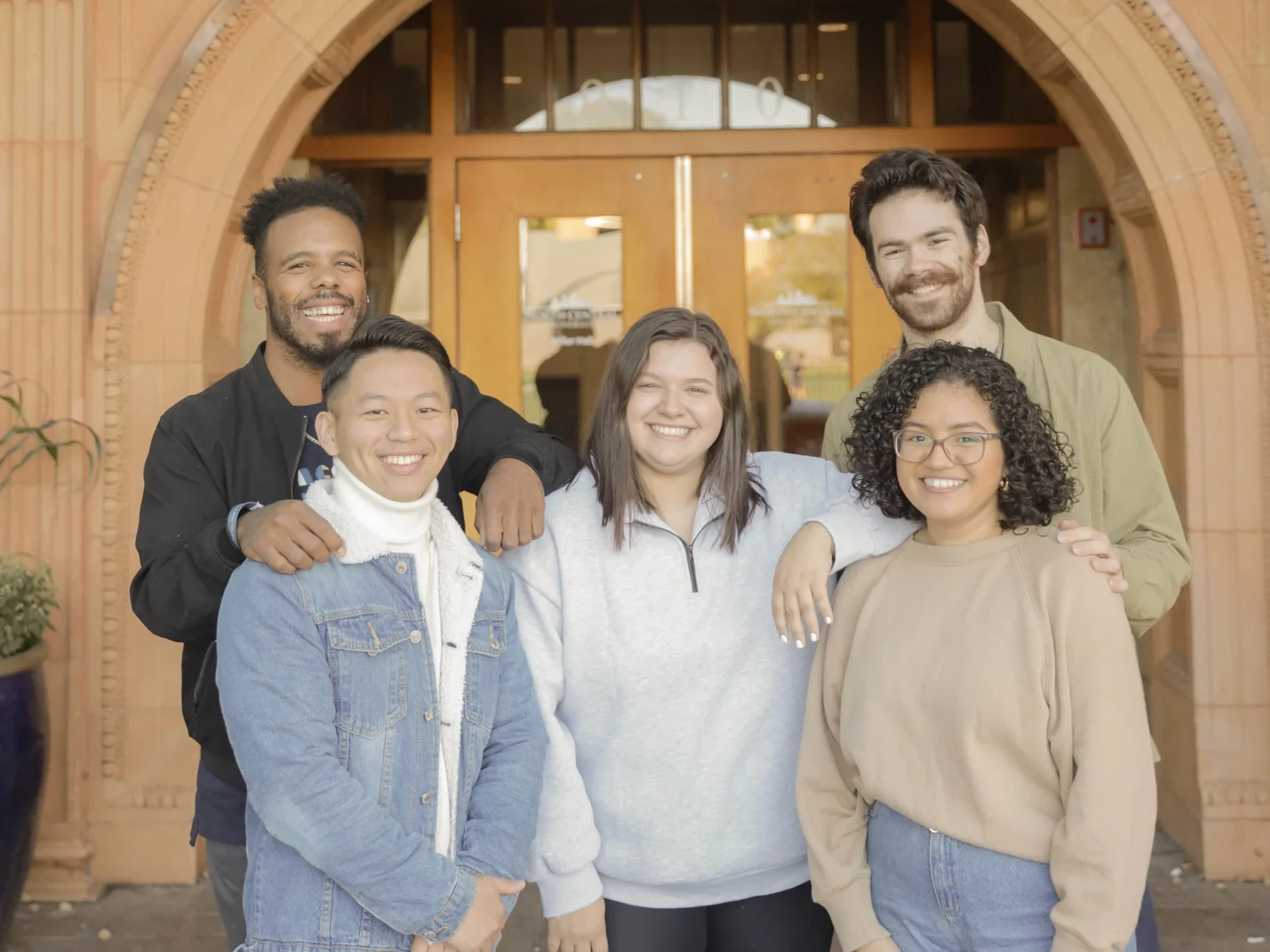
At North Central University, we experience Jesus’ affirmation, “For where two or three are gathered in my name, there am I with them” (Matthew 18:20). We want to be open to sharing Jesus’ gospel and following the Holy Spirit, so we have built the student experience around engaging in community.
Each student is here to grow as a whole person – not just to complete a degree – and we’re here to help you develop personally, professionally, and spiritually. Residential undergraduates, graduate students, and online students can all take part in our supportive, multi-cultural community, though it may look and feel different for each learning pathway.
Our beautiful downtown Minneapolis campus encourages students and faculty to share space as we share ideas and grow in our faith, and our online courses are designed to encourage connection and collaboration across regions and time zones.